King Arthur and the Quiet Art of Disaster Recovery

As anyone who knows me can attest I not only sound like a mix between a pirate and a farmer from the rural southwest I’m also very proud of the region, its vast heritage, lore, stories and history. One of the most famous of these stories is king Arthur who is famously from the region, as you can expect from me by now I can find a way to link anything to devops and the Arthurian legend can provide some key insights into how we handle disaster recovery and business continuity, for clarity for those who don’t deal with these concepts daily think of it like this Arthur is Disaster Recovery (DR). The Round Table is Business Continuity (BC).
King Arthur is not remembered because Camelot never failed. Camelot failed constantly. Knights died, kings vanished, and the realm fractured. But in the South West of England, from the hill fort of Cadbury Castle in Somerset (Arthur’s “head office” and primary data centre) to Glastonbury Tor (where Arthur was taken when Camelot fell, or our cold storage site as he lies still waiting for when we need him again), the legend survived not because of 100% uptime, but because of a regional commitment to recovery.
While Tintagel was where Arthur was “deployed” (please forgive the pun), the rivers of Bristol acted as the high-speed “network” for the kingdom’s trade and defense, the system was never perfect (and what system ever is if we’re honest with ourselves). Camelot was a disaster recovery (DR) strategy in a sword and sandals costume.
Camelot Was Never “Highly Available”, it was a single point of failure disguised as a golden age.
One king. One court. When Arthur was present, things worked. When he was wounded, betrayed, or awkwardly off on a mystical side quest across the Somerset Levels, the system degraded fast.
This was not an HA (Highly Available) architecture. This was a monolith with a heroic uptime record and absolutely terrible fault tolerance.
And yet, Camelot keeps coming back and is ingrained in the psyche of the country.
The Sword in the Stone Is Your Cold Start Plan

Arthur didn’t become king because he had documentation in triplicate. He becomes king because there is a deterministic recovery mechanism when leadership collapses. The sword in the stone is not just symbolism, It was a control plane to ensure there was a king (a master node).
When the old system fails, there is a known, tested path to re-establish authority. No emergency committee. No war of succession. pull out sword. Verify outcome. Resume operations.
That’s a cold-start recovery done right. Slow, dramatic, but utterly reliable. Excalibur Is Not Power. It’s Continuity, it provides the path to recovery. People fixate on Excalibur as a weapon however they miss the important part: it comes from outside Camelot, its not part of the system that fails.
Excalibur is issued by the Lady of the Lake (what better source for a system of government than a strange woman lying in a pond distributing swords),an external dependency, but a trusted one. When Arthur loses the sword, the kingdom wobbles. When it’s returned to the lake, the system shuts down cleanly.
In resiliency terms, Excalibur is:
A protected backup
Stored offsite
Controlled by a party independent of daily operations
Arthur doesn’t keep it under his bed. He knows better.
The Round Table Is Organizational Resilience
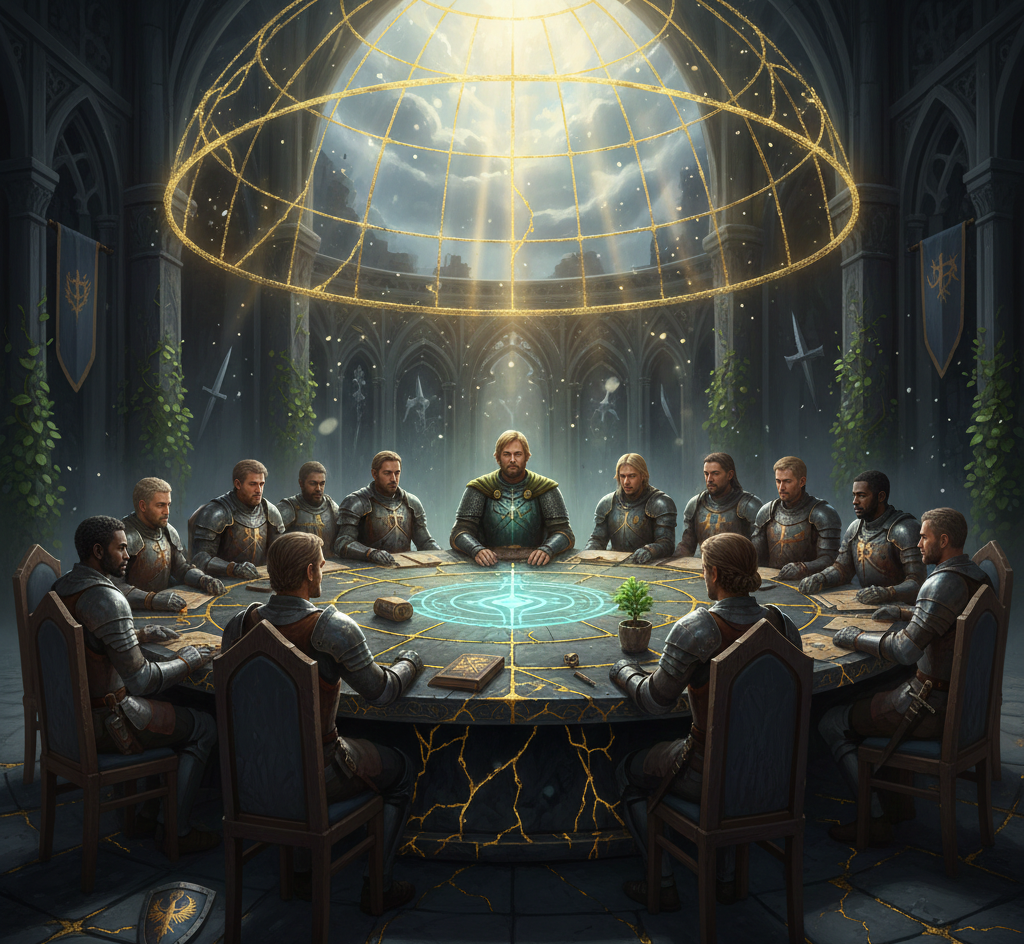
The Round Table is the most practical piece of engineering in the entire myth, No head. No hierarchy at the table. Authority is distributed, Knights can operate independently. When one fails, the mission does not automatically collapse, there is resilience built in. That’s not chivalry. That’s redundancy.
Camelot survives betrayals and deaths because decision making and execution aren’t locked to a single role or person. The table is an org chart designed to survive attrition. A lot of modern businesses would be improved by replacing “hero engineer” with “round table.”, ensure there are no single points of failure even within your people.
Arthur’s Absence Is the Ultimate DR Test
Arthur spends an alarming amount of time unavailable. He’s Wounded at Camlann. Betrayed by Mordred. Taken to Avalon with a very noncommittal SLA about his return and yet the legend endures: the king will return when Britain needs him most.
That’s not fantasy. That’s a deferred recovery with clear expectations and invocation guidelines.
Resilient systems like Camelot accept that some failures cannot be instantly fixed. They focus on:
- Preserving the core
- Maintaining legitimacy
- Preventing total collapse
- Making eventual restoration possible
Arthur doesn’t need to be present forever. He needs to be recoverable when required.
The Uncomfortable Truth
Camelot eventually fails as all things will, not because it lacked recovery plans, but because culture rotted faster than systems could adapt. Lancelot and Guinevere is not a true love story. It’s an insider threat. Mordred is not an external attacker. He’s poor governance with a familiar face.
Business resiliency fails the same way:
- Perfect backups
- Flawless runbooks
- No trust
- No shared values
- No discipline
Disaster recovery can restore systems. It cannot restore integrity, also just like the search for the holy grail diverted critical resources away from the core misson, putting your engineers on the impossible task of a perfect DR or perfect uptime will do nothing but burn them out and diverted their talents and skills away from other more critical missions.
The Knights code for Engineers
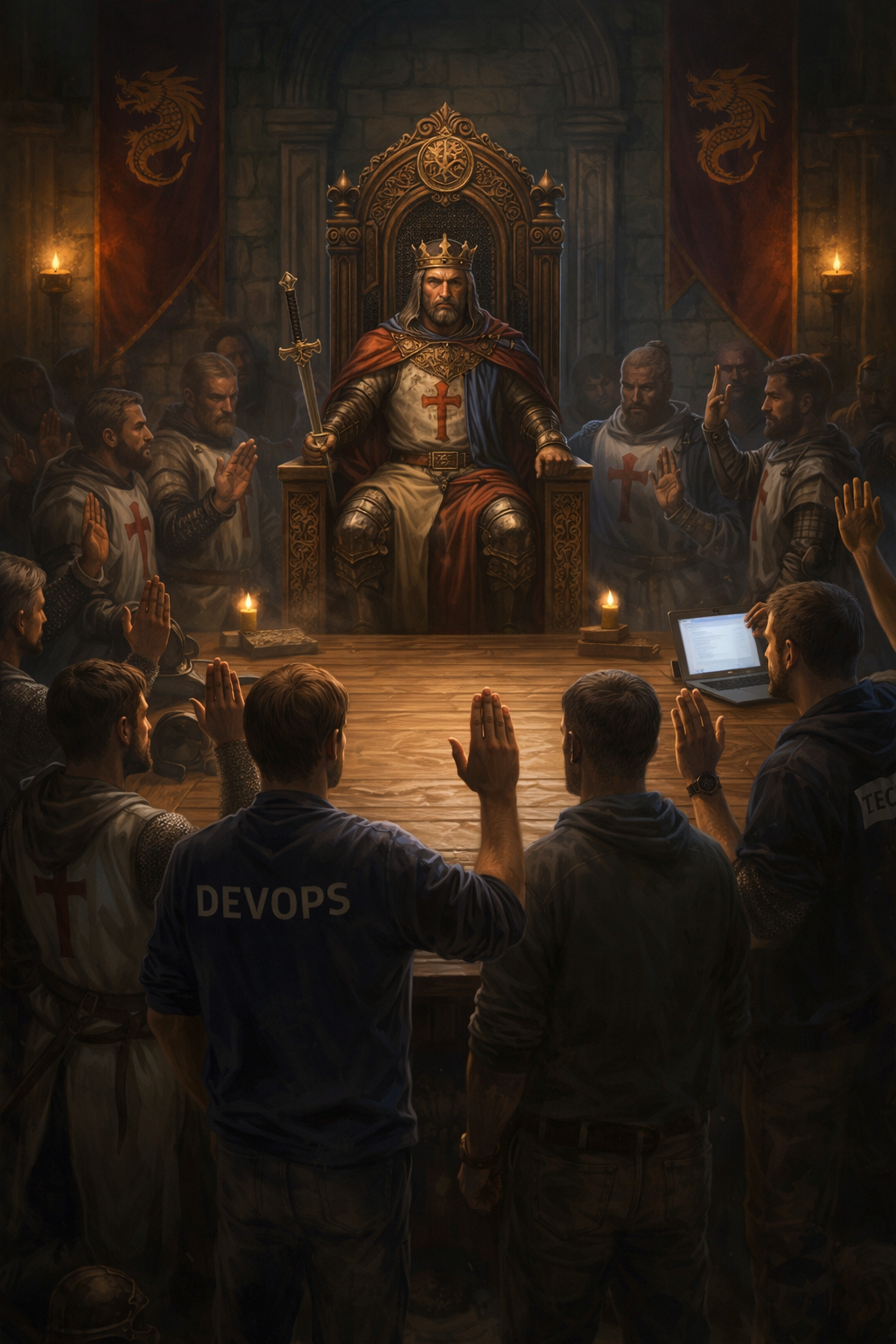
Just like the Knights code of honor from years gone by engineers also need a code, one that clearly shows their priorities, where they need to focus and where their ultimate loyalty lies.
Reject the Holy Grail
Thou shalt not pursue the myth of 100% uptime or the perfect architecture. those quests divert thy strength not only from the core mission but lead only to the burnout of thy peers. Honor the “Good Enough” that is resilient, rather than the “Perfect” that is fragile.
Defend the Round Table
Thou shalt ensure that authority is distributed. No single “Hero Knight” shall hold the keys to the entire kingdom in a silo. If a system requires a specific person to survive the night of battle, that system is a failure of chivalry. Redundancy is not just for servers; it is also more importantly for knowledge.
Practice the Sword in the Stone
Thou shalt not rely on mystical incantations known only to a few. Thy Recovery Procedures must be deterministic, idempotent and accessible. Any knight of the realm should be able to approach the stone (runbook) and restore the King (service) through a tested, repeatable path.
Guard Against the Mordred Within
Thou shalt recognize that Integrity is the ultimate firewall. No amount of encryption can protect a kingdom where trust has rotted. Foster a blameless culture, for when knights fear to speak of their mistakes, they invite the “Insider Threat” of hidden technical debt and resentment.
Honor the Lady of the Lake
Thou shalt keep thy Backups sacred and off-site. Like Excalibur, thy recovery data must reside outside the system that is prone to fail. Treat thy external dependencies with respect, but never forget that a sword is only useful if thou hast the discipline to wield it.
Serve the Realm, Not the King
Thy loyalty belongs to the User (Realm), not to a specific technology or a single leader. Systems exist to provide value to the people of the Somerset Levels and beyond; if the technology no longer serves the realm, it must be retired with honor.
The Lesson Worth Keeping
King Arthur isn’t a myth about stability. He’s a myth about restoration.
Strong systems are not the ones that never break. They are the ones that:
- Expect failure
- Design for return
- Distribute authority
- Keep their backups sacred
- Accept that leaders, like servers, may go offline
Camelot was never immortal. It was resilient, That’s the difference that matters.
Always remember next time you’re walking the Mendips or looking out over the Levels toward the Tor, don’t just see an amazing beautiful landscape. See a legacy of resilience. The King isn’t gone; he’s just waiting for the next P1 to return.